
Torréfacteur Neon Coffee Roasters
Finca El Carmen - Colombia - Anaerobic Honey Geisha
Finca El Carmen - Colombia - Anaerobic Honey Geisha
Couldn't load pickup availability
250g
Region: Iquira, Huila
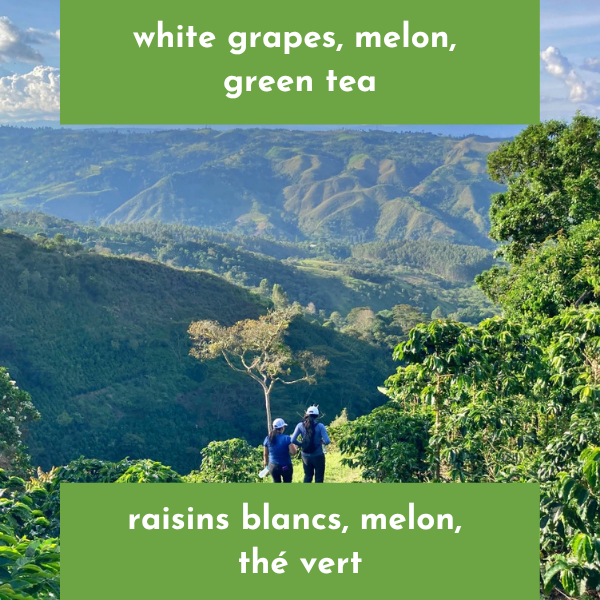
Flavour notes: white grapes, melon, green tea
Variety: Geisha
Altitude: 1700m
Story
Geiner Marines is a bit of an enigma. Barber by day and coffee grower by night (that is to say, in the non-harvest and harvest season), Geiner has decided to focused and zero-in on the Geisha varietal. His eye for detail and exactitude when it comes to growing and processing coffee showed when we first tasted his coffee: sweet, rich in body, yet with all those trademark varietal qualities of Geisha, crisp acidity and lushious florals.
Geisha is arguably one of, if not the most, infamous varieties of coffee. Originally collected from coffee forests in Ethiopia in the 1930s, it was then sent to the Lyamungu research station in Tanzania, and then brought to Centro Agronómico Tropical de Investigación y Enseñanza (CATIE) in Central America in the 1953, where it was logged as accession T2722. It was distributed throughout Panama via CATIE in the 1960s after it had been recognized for tolerance to coffee leaf rust. However, the plant's branches were brittle and not well favoured by farmers, thus, it was not widely planted. The coffee first came to prominence in 2005 when the Peterson family of Boquete, Panama, entered it into the "Best of Panama" competition and auction. It received an exceptionally high score and broke the then-record for green coffee auction prices, selling for over $20 per pound. It's fame (and prices) have only grown since, and Geisha is now grown throughout the world, with a strong foothold in Latin America.
Transparency
Cup Score: 89
Quantity Purchased: 48kg
Free On Board: 7.95 USD/lb
Free On Truck: 12.77 USD/lb
Fermentation: Anaerobic Honey
Processing begins with the selective harvesting of ripe coffee cherries, which are then pulped to remove the outer skin while retaining mucilage before undergoing a 72-hour anaerobic fermentation. The cherries are then spread on raised drying beds and are carefully monitored and turned periodically to ensure uniform drying over several weeks. As the mucilage dries, it takes on a hue, indicating the sugar content and level of fermentation. Once dried to the desired moisture content, the mucilage is removed, and the beans are sorted and allowed to rest to stabilize moisture and mature the flavours.